

Healing Our Earth,
One Tree At A Time
Healing Our Earth,
One Tree At A Time
Healing Our Earth,
One Tree At A Time
Sustainability
As timber specialists, we know that wood is one of the planet’s most valuable resources. Each board carries responsibility, and we act through science-based solutions and responsible sourcing to secure a sustainable future.
Timber: Earth’s Natural Carbon Store
Timber is our green solution. Every tree absorbs carbon as it grows, locking it away in its grain. When we build with timber, that carbon stays stored for the lifetime of the structure. It means every deck, every facade, every space made with wood becomes part of the solution to climate change.
Biogenic Carbon: Nature’s Hidden Gift
This stored carbon has a name: biogenic carbon. Unlike emissions that add to the atmosphere, biogenic carbon is safely captured in the wood itself. As long as the timber is in use, that carbon remains locked away. Every cubic metre of timber holds nearly a ton of it, turning your project into a natural carbon vault.
What is Low Embodied Carbon?
Every material carries a hidden footprint: the emissions released when it is made, transported, and installed. This is embodied carbon. Timber has one of the lowest embodied carbon profiles of any building material, especially when sourced responsibly.
Timber: Earth’s Natural Carbon Store
Timber is our green solution. Every tree absorbs carbon as it grows, locking it away in its grain. When we build with timber, that carbon stays stored for the lifetime of the structure. It means every deck, every facade, every space made with wood becomes part of the solution to climate change.
Biogenic Carbon: Nature’s Hidden Gift
This stored carbon has a name: biogenic carbon. Unlike emissions that add to the atmosphere, biogenic carbon is safely captured in the wood itself. As long as the timber is in use, that carbon remains locked away. Every cubic metre of timber holds nearly a ton of it, turning your project into a natural carbon vault.
What is Low Embodied Carbon?
Every material carries a hidden footprint: the emissions released when it is made, transported, and installed. This is embodied carbon. Timber has one of the lowest embodied carbon profiles of any building material, especially when sourced responsibly.
Timber: Earth’s Natural Carbon Store
Timber is our green solution. Every tree absorbs carbon as it grows, locking it away in its grain. When we build with timber, that carbon stays stored for the lifetime of the structure. It means every deck, every facade, every space made with wood becomes part of the solution to climate change.
Biogenic Carbon: Nature’s Hidden Gift
This stored carbon has a name: biogenic carbon. Unlike emissions that add to the atmosphere, biogenic carbon is safely captured in the wood itself. As long as the timber is in use, that carbon remains locked away. Every cubic metre of timber holds nearly a ton of it, turning your project into a natural carbon vault.
What is Low Embodied Carbon?
Every material carries a hidden footprint: the emissions released when it is made, transported, and installed. This is embodied carbon. Timber has one of the lowest embodied carbon profiles of any building material, especially when sourced responsibly.
Timber: Earth’s Natural Carbon Store
Timber is our green solution. Every tree absorbs carbon as it grows, locking it away in its grain. When we build with timber, that carbon stays stored for the lifetime of the structure. It means every deck, every facade, every space made with wood becomes part of the solution to climate change.
Biogenic Carbon: Nature’s Hidden Gift
This stored carbon has a name: biogenic carbon. Unlike emissions that add to the atmosphere, biogenic carbon is safely captured in the wood itself. As long as the timber is in use, that carbon remains locked away. Every cubic metre of timber holds nearly a ton of it, turning your project into a natural carbon vault.
What is Low Embodied Carbon?
Every material carries a hidden footprint: the emissions released when it is made, transported, and installed. This is embodied carbon. Timber has one of the lowest embodied carbon profiles of any building material, especially when sourced responsibly.
Timber: Earth’s Natural Carbon Store
Timber is our green solution. Every tree absorbs carbon as it grows, locking it away in its grain. When we build with timber, that carbon stays stored for the lifetime of the structure. It means every deck, every facade, every space made with wood becomes part of the solution to climate change.
Biogenic Carbon: Nature’s Hidden Gift
This stored carbon has a name: biogenic carbon. Unlike emissions that add to the atmosphere, biogenic carbon is safely captured in the wood itself. As long as the timber is in use, that carbon remains locked away. Every cubic metre of timber holds nearly a ton of it, turning your project into a natural carbon vault.
What is Low Embodied Carbon?
Every material carries a hidden footprint: the emissions released when it is made, transported, and installed. This is embodied carbon. Timber has one of the lowest embodied carbon profiles of any building material, especially when sourced responsibly.
Sustainability has never been an afterthought for us. It has always been part of our relationship with timber — a material that carries the memory of time, holds carbon in its core, and connects people to nature.
At Calvary we take on this responsibility. Every choice we make, from the forests we source from to the systems we design, is guided by one belief: what we build today must still matter tomorrow.
Sustainability has never been an afterthought for us. It has always been part of our relationship with timber — a material that carries the memory of time, holds carbon in its core, and connects people to nature.
At Calvary we take on this responsibility. Every choice we make, from the forests we source from to the systems we design, is guided by one belief: what we build today must still matter tomorrow.
The Carbon Math: Timber Stores, Steel & Concrete Emit
The Carbon Math: Timber Stores, Steel & Concrete Emit


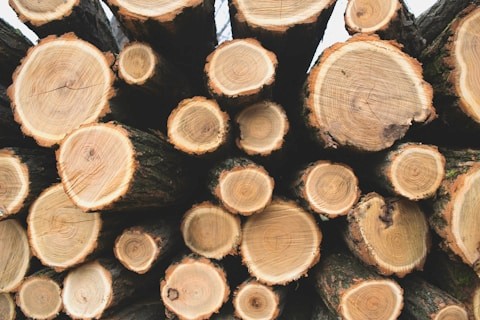
~1,000 kg CO2 stored
Carbon Emitted / kg
Carbon Stored / kg
1 m³ of Material
Timber
Concrete
Steel
~410 kg CO2 emitted
~1370 kg CO2 emitted

Steel and concrete have built our cities, but at a cost. Steel is energy-hungry to produce, and concrete relies on cement — one of the most carbon-intensive materials on earth. Timber is different. It is renewable, lighter to move, and it stores carbon rather than releasing it. In every way, timber proves that the strongest future is the one rooted in nature. Compared to steel and concrete, timber is the only structural material that gives back more than it takes. It stores carbon, is lighter to move, and supports a circular future for construction.

Every cubic metre of timber locks away as much carbon as a car driving from Singapore to Bangkok. Steel and concrete, on the other hand, add that much carbon before construction even begins.
Every cubic metre of timber locks away as much carbon as a car driving from Singapore to Bangkok. Steel and concrete, on the other hand, add that much carbon before construction even begins.
We only work with responsibly sourced materials —
timber that is FSC®-certified or approved by the Singapore Green Building Council.
We only work with responsibly sourced materials — timber that is FSC®-certified or approved by the Singapore Green Building Council.
Alongside this, we choose low-VOC finishes and solutions that protect indoor air quality. For every project, this means you get timber that is durable, sustainable, and healthier for the spaces people live and work in.

Calvary Carpentry is proud to be the first Timber specialist in Asia to adopt the ISO 14064 Standard.
Calvary Carpentry is proud to be the first Timber specialist in Asia to adopt the ISO 14064 Standard.
ISO 14064 is the global standard for measuring and verifying greenhouse gas emissions. For us, it means putting our operations under rigorous climate auditing, from sourcing and logistics to installation. For you, it means confidence that every plank of timber we supply comes with transparent, credible reporting on its environmental footprint.
Why does this matter? Because real sustainability is about but proof. By taking this step, we hold ourselves accountable to the highest standards, giving you the assurance that your project contributes to a lighter, more responsible future.
ISO 14064 is the global standard for measuring and verifying greenhouse gas emissions. For us, it means putting our operations under rigorous climate auditing, from sourcing and logistics to installation. For you, it means confidence that every plank of timber we supply comes with transparent, credible reporting on its environmental footprint.
Why does this matter? Because real sustainability is about but proof. By taking this step, we hold ourselves accountable to the highest standards, giving you the assurance that your project contributes to a lighter, more responsible future.
ISO 14064 is the global standard for measuring and verifying greenhouse gas emissions. For us, it means putting our operations under rigorous climate auditing, from sourcing and logistics to installation. For you, it means confidence that every plank of timber we supply comes with transparent, credible reporting on its environmental footprint.
Why does this matter? Because real sustainability is about but proof. By taking this step, we hold ourselves accountable to the highest standards, giving you the assurance that your project contributes to a lighter, more responsible future.
A Collaborative Timber Ecosystem
A Collaborative Timber Ecosystem
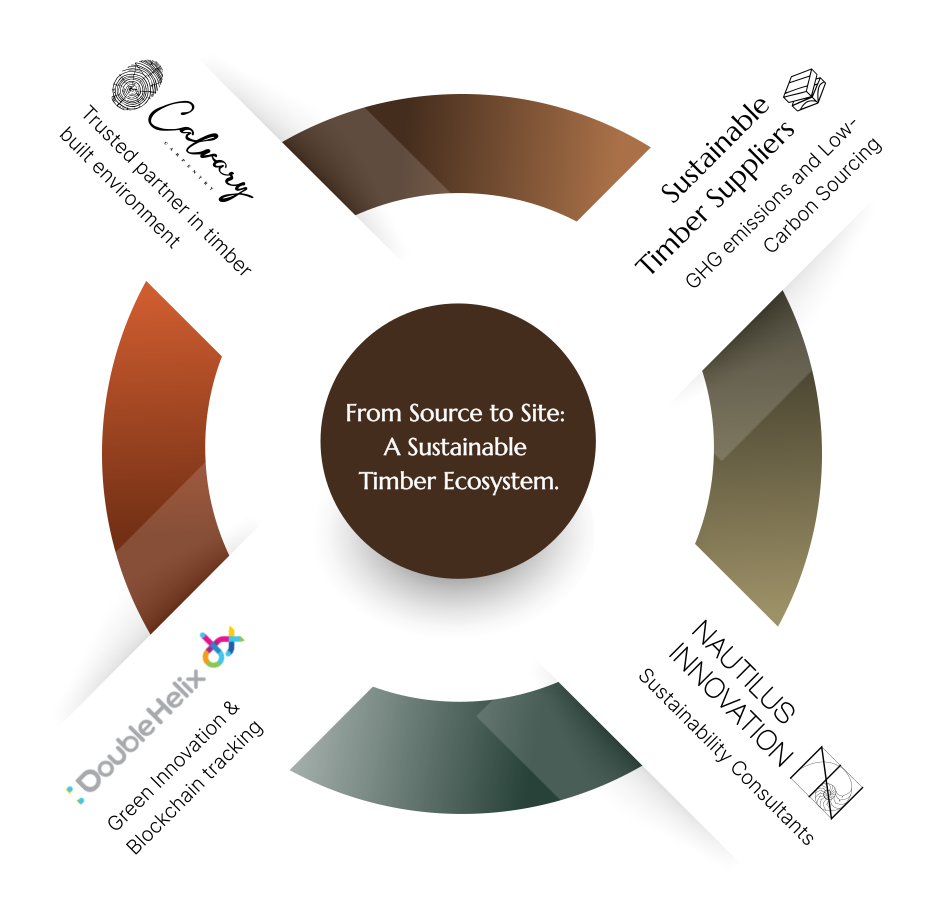
We know sustainability cannot be achieved in isolation. That’s why we collaborate with responsible timber suppliers, innovation partners, and sustainability consultants who share our vision. Together, we create a circular ecosystem where every project contributes to lighter footprints and lasting impact.


Green Innovation & Blockchain tracking

Sustainability Consultants
Sustainable Timber Suppliers
GHG emissions and Low-Carbon Sourcing

Trusted partner in timber built environment
From source to site:
a sustainable
timber ecosystem.

Case Studies
Case Studies
Singapore’s Geneo Canopy: A Landmark in Timber Sustainability
Singapore’s Geneo Canopy: A Landmark in Timber Sustainability
Singapore’s Geneo Canopy: A Landmark in Timber Sustainability
The 27-metre Geneo Timber Canopy is Southeast Asia’s tallest single-span timber structure — and one of the most ambitious sustainable engineering projects in the region. Spanning a 3,000-square-metre public plaza, it connects five buildings and unites an entire precinct under a canopy of engineered wood.
Built with more than 1,150 cubic metres of PEFC-certified spruce glulam, the project showcases how timber can replace high-emission materials like steel and concrete at scale. Every cubic metre locks away nearly a tonne of carbon, turning the canopy into a living carbon vault.
Beyond the numbers, the canopy is proof of what mass-engineered timber can achieve in Singapore’s urban environment — elegant design, rapid off-site prefabrication, and resilience tested against fire, rain, and time. It stands not just as an architectural centerpiece, but as a signal of where construction in Asia is headed: lighter footprints, smarter systems, and stronger connections between people and nature
The 27-metre Geneo Timber Canopy is Southeast Asia’s tallest single-span timber structure — and one of the most ambitious sustainable engineering projects in the region. Spanning a 3,000-square-metre public plaza, it connects five buildings and unites an entire precinct under a canopy of engineered wood.
Built with more than 1,150 cubic metres of PEFC-certified spruce glulam, the project showcases how timber can replace high-emission materials like steel and concrete at scale. Every cubic metre locks away nearly a tonne of carbon, turning the canopy into a living carbon vault.
Beyond the numbers, the canopy is proof of what mass-engineered timber can achieve in Singapore’s urban environment — elegant design, rapid off-site prefabrication, and resilience tested against fire, rain, and time. It stands not just as an architectural centerpiece, but as a signal of where construction in Asia is headed: lighter footprints, smarter systems, and stronger connections between people and nature
Read More


Ritz-Carlton, Fari Islands, Maldives: Net-Zero Ready with Timber at the Core
Ritz-Carlton, Fari Islands, Maldives: Net-Zero Ready with Timber at the Core
Ritz-Carlton, Fari Islands, Maldives: Net-Zero Ready with Timber at the Core
The Fari Islands in the Maldives have become a global model for eco-tourism, blending hospitality with bold climate action. At the heart of this development is the decision to use mass engineered timber instead of concrete and steel — a choice that reduced carbon emissions by more than 6,000 tonnes during construction and transport.
Every villa and structure was prefabricated off-site, minimising marine impact and streamlining assembly. Unlike traditional thatched roofs, the flat-roof design accommodates one of the Maldives’ largest solar arrays, with floating marine solar platforms now supplying nearly half the islands’ energy needs.
Sourcing was equally rigorous. With no domestic timber industry in the Maldives, the project partnered with Double Helix to trace timber origins using DNA testing and ensure PEFC certification. This set a new benchmark not just for luxury resorts, but for how timber can support communities, protect ecosystems, and power a net-zero future.
The Fari Islands stand as proof that sustainability and world-class design are not competing goals, but shared outcomes — with timber leading the way.
The Fari Islands in the Maldives have become a global model for eco-tourism, blending hospitality with bold climate action. At the heart of this development is the decision to use mass engineered timber instead of concrete and steel — a choice that reduced carbon emissions by more than 6,000 tonnes during construction and transport.
Every villa and structure was prefabricated off-site, minimising marine impact and streamlining assembly. Unlike traditional thatched roofs, the flat-roof design accommodates one of the Maldives’ largest solar arrays, with floating marine solar platforms now supplying nearly half the islands’ energy needs.
Sourcing was equally rigorous. With no domestic timber industry in the Maldives, the project partnered with Double Helix to trace timber origins using DNA testing and ensure PEFC certification. This set a new benchmark not just for luxury resorts, but for how timber can support communities, protect ecosystems, and power a net-zero future.
The Fari Islands stand as proof that sustainability and world-class design are not competing goals, but shared outcomes — with timber leading the way.
Read More
Sustainable Product Line
Sustainable Product Line

Onewood
Onewood
From surface to core, OneWood is built to last. Grown once, lasts a lifetime — a timber solution made for resilience and responsibly.
Moso
Moso
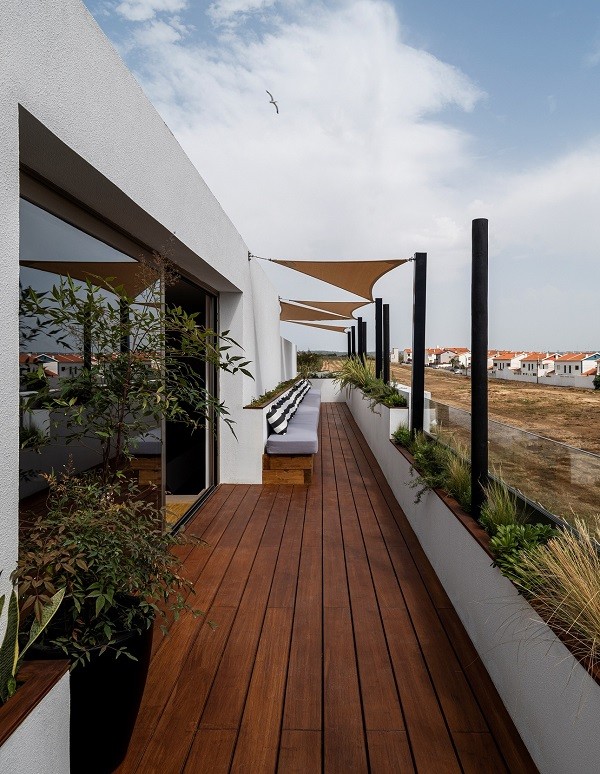
Made from the fastest growing trees on earth: Bamboo. With Moso, speed meets sustainability — renewably grown, engineered to perform.

Champaca
Champaca
Every fibre counts. Champaca turns timber off-cuts into lasting products, proving that nothing is wasted when design meets responsibility.

Accoya
Accoya
Strength from the source. Sustainably harvested for consistent durability and stability, Accoya is engineered for high-performance exteriors.

From Responsible Resource to Remarkable Spaces
The journey of sustainable timber is one we share with forward-thinking developers, visionary architects, and discerning consumers. Join us in shaping a legacy built on certainty and care.
From Responsible Resource to Remarkable Spaces
The journey of sustainable timber is one we share with forward-thinking developers, visionary architects, and discerning consumers. Join us in shaping a legacy built on certainty and care.
From Responsible Resource to Remarkable Spaces
The journey of sustainable timber is one we share with forward-thinking developers, visionary architects, and discerning consumers. Join us in shaping a legacy built on certainty and care.

Have more questions?
We’re here to help.
Just send us your enquiry and we will contact you.


© 2026 Calvary Carpentry Pte. Ltd. All Rights Reserved.
Privacy
Have more questions?
We’re here to help.
Just send us your enquiry and we will contact you.
© 2026 Calvary Carpentry Pte. Ltd. All Rights Reserved.
Privacy
Have more questions?
We’re here to help.
Just send us your enquiry and we will contact you.
© 2026 Calvary Carpentry Pte. Ltd. All Rights Reserved.
Privacy
